For most of the last two decades, Austin was the poster child for Texas’s growth story. That story has changed.
Recent Census Bureau estimates show Austin added roughly 4,000 residents over a recent 12-month stretch, bringing the city’s population to just over 993,500 — enough to knock it down to the 13th-largest city in the country, a spot it held as recently as two years earlier when it ranked 10th. Within Texas, Austin now sits fifth among the state’s own cities, trailing Houston (about 2.4 million), San Antonio (about 1.53 million), Dallas (about 1.33 million), and Fort Worth (just over 1 million).
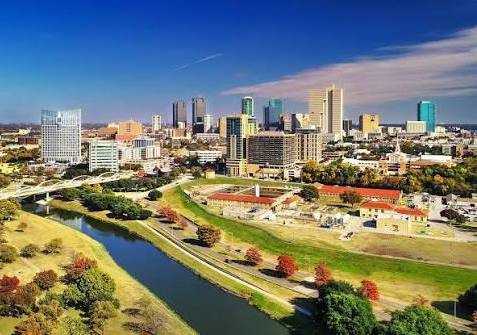
Fort Worth, by contrast, has been on a tear. It has posted some of the largest single-year numeric gains of any city in the country in recent Census cycles, and it’s now the 15th-largest city nationally, ahead of longtime rival Indianapolis. Growth in North Texas isn’t limited to the core cities, either — suburbs like Frisco, Little Elm, McKinney, and Denton have each ranked among the country’s fastest-growing communities by percentage in recent years.
The Austin area’s growth hasn’t stopped, it’s just moved to the suburbs. Georgetown surpassed 100,000 residents and has repeatedly ranked as the fastest-growing city in the nation by percentage. Hutto, Kyle, and Leander have all posted double-digit growth rates even as the city of Austin itself has slowed to single-digit-thousands of new residents per year. The broader Austin–Round Rock metro area, which spans Travis, Williamson, Hays, Bastrop, and Caldwell counties, is still adding population — it’s just no longer concentrated inside Austin’s city limits.
Demographers attribute the pattern to a familiar big-city cycle: as central housing costs rise and buildable land inside the core shrinks, growth shifts outward to suburban rings with newer housing stock and lower prices. San Antonio has also continued to add residents steadily, and it briefly led the nation in raw population growth during the pandemic years as people moved out of costlier coastal metros.
What it means locally: city planners in Austin are increasingly competing with their own suburbs for residents and tax base, while infrastructure and school-district planning in fast-growing suburban counties — Williamson, Denton, Collin, Comal — will likely stay under pressure for years to come.
Sources: U.S. Census Bureau population estimates (via Real Estate in Austin, Community Impact, The Texas Tribune).