
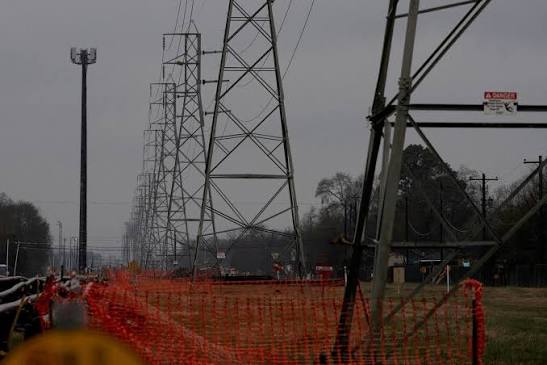
Texas’s power grid faced its toughest test yet this year — and, for once, that’s a good-news story.
The Electric Reliability Council of Texas set a new all-time peak-demand record of roughly 91.1 gigawatts on July 22, 2026, during a stretch of extreme summer heat, according to grid data highlighted in trade coverage this month. What stands out isn’t just the record itself; it’s that ERCOT avoided issuing a single conservation appeal while hitting it. That’s a sharp turnaround from 2023, when the grid operator issued six such appeals during a comparable heat wave, and from the 2008–2022 stretch, when nearly 50 conservation appeals were called in total.
The difference, according to the same coverage, comes down to a rapid build-out of battery storage and solar generation. Utility-scale battery capacity on the Texas grid reached about 13.9 gigawatts at the start of 2026 — nearly double the 7.8 gigawatts in place just a year earlier — making Texas the national leader in grid-scale battery deployment. Solar and battery storage together accounted for 91% of all new generating capacity added nationwide in the first quarter of 2026. Federal energy forecasters expect utility-scale solar to outproduce coal on the Texas grid for an entire year for the first time in 2026.
That’s a meaningfully more optimistic picture than the one ERCOT itself painted in an earlier five-year outlook, which modeled a scenario where summer supply could fall as much as 6.2% short of peak demand by 2026, widening to a 32.4% shortfall by 2029 if new generation projects — including those backed by the state’s $10 billion Texas Energy Fund loan program for natural-gas plants — face delays. ERCOT CEO Pablo Vegas has said the agency is continuing to work with state lawmakers and the Public Utility Commission on both battery expansion and demand-response programs with large industrial users to keep supply margins healthy as data centers and other large loads continue plugging into the grid.
None of this is free. Oncor and CenterPoint customers began seeing the effects of April 2026 rate approvals from the Public Utility Commission, adding roughly $7.00 and $5.10, respectively, to a typical residential customer’s monthly delivery charge. Even so, Texas’s average residential electricity rate — about 15.4 cents per kilowatt-hour in the second quarter of 2026 — remains well below the national average of roughly 17.65 cents.
What it means locally: if you made it through this summer’s heat without a rolling blackout or a conservation-alert text, battery storage is a big part of why. The tradeoff shows up on the delivery-charge line of your electric bill rather than in outages.
Sources: ERCOT peak-demand and reliability data via CleanTechnica/SolarReviews; ERCOT five-year reliability report via The Texas Tribune/CBS News Texas; Energy Ogre Texas Electricity Market Update, Q2 2026.