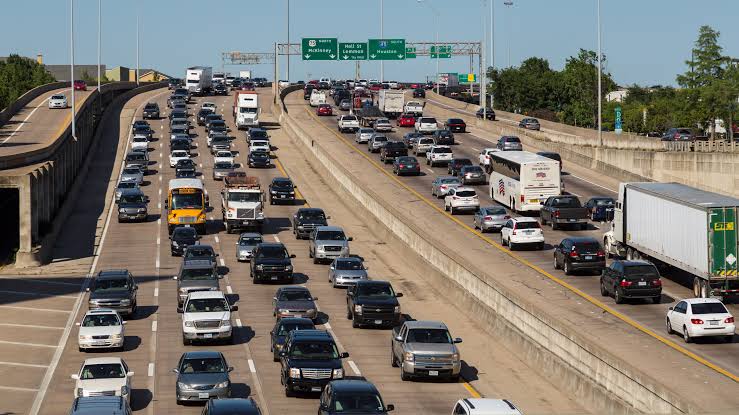
If your commute in one of Texas’s big four metros feels like it’s been under construction for years, that’s because — in a very real sense — it has been, and it’s going to stay that way for a while longer.
The Texas Department of Transportation’s Unified Transportation Program, the agency’s rolling ten-year project-development plan, is currently funding some of the largest highway rebuilds in state history across Austin, Dallas-Fort Worth, and Houston. In Dallas, TxDOT broke ground this year on the $888 million I-30 Canyon Improvement Project, which will widen I-30 from six to twelve lanes between the I-35E and I-45 interchanges and rework city-street connections severed by the original freeway; construction is expected to run through 2031. In Fort Worth, a separate $2.2 billion Southeast Connector project is underway through 2030, alongside a $267 million I-30 widening between Linkcrest Drive and I-820.
Houston’s transformation is the most expensive of all: the I-45/I-69/I-10 North Houston Highway Improvement Project, TxDOT’s overhaul of the freeway loops through the city’s urban core, carries a price tag of roughly $4.97 billion and a construction window stretching to 2038. Austin isn’t far behind — the I-35 Capital Express Central project alone is budgeted at $4.5 billion to add non-tolled managed lanes between US 290 East and US 290 West, part of a broader I-35 overhaul running from 2022 through the early 2030s that also includes the nearly complete Oak Hill Parkway interchange rebuild.
Transit projects are moving in parallel with the highway work. Austin’s light-rail plan cleared a Federal Transit Administration environmental review early this year, a required step toward securing federal construction funding, while Texas Central’s long-discussed Houston-to-Dallas high-speed rail line has continued to draw renewed attention from regional business groups, even as its funding and timeline remain unsettled. Locally, Houston City Council has kept approving smaller but steady infrastructure spending — including a recent $9.1 million contract for street and drainage work in the Roseland community and a separate $35 million package of citywide street and drainage projects — as the city works through a backlog of flood-mitigation needs following recent storm seasons.
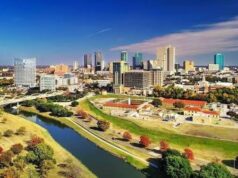
Fort Worth’s growth has also pushed it past a milestone: recent Census figures put the city’s population above Indianapolis, making it the 15th-largest city in the country, and city and TxDOT planners are treating current road capacity as inadequate for that trajectory over the next decade.
What it means locally: residents in all four major metros should expect years, not months, of active lane closures and detours on their primary commuter corridors — but the projects are designed around growth planners expect to continue well into the 2030s, not just today’s traffic counts.
Sources: Texas Department of Transportation, Unified Transportation Program project data and March 2026 newsroom update; Community Impact Newspaper, Austin and Houston transportation coverage, 2026; Toll Roads News, Houston Metro Area project updates.