
AUSTIN, Texas — Texas closed out the summer with a headline number state leaders were eager to promote: more nonfarm jobs added over the past year than any other state in the country. But a closer look at the data — and a separate forecast from the Federal Reserve Bank of Dallas — suggests the state’s job engine, while still running, has throttled back from the pace Texans have grown used to.
Governor Greg Abbott’s office touted August labor market figures showing Texas added 159,400 nonfarm jobs over the 12 months ending in August 2026, a 1.1% annual growth rate that outpaced the national rate by 0.7 percentage points . “The Texas workforce is the envy of the nation,” Abbott said in a statement, crediting the state’s business climate for giving employers the confidence to keep hiring. The figures were released by the Texas Workforce Commission alongside federal labor data.
That framing tells only part of the story. The Dallas Fed’s own Texas Employment Forecast, updated September 18, projects jobs will grow just 1.2% for all of 2026 — well below the state’s long-run average of roughly 2% . Dallas Fed senior business economist Luis Torres noted that year-to-date job growth of 1.0% reflects “labor supply constraints” after first-quarter revisions pulled the numbers down from earlier, more optimistic estimates. The Fed’s forecast implies the state will add about 173,600 jobs by the end of the year, bringing total employment to roughly 14.5 million.
The two data sets aren’t necessarily in conflict — they measure different windows and use different methodologies — but together they paint a picture of an economy that’s still expanding, just not as fast as it has historically. Texas notably grew its economic output through 2025 with almost no net job growth, a combination the Dallas Fed says hadn’t happened since the state climbed out of the early-2000s dot-com bust, and something regional economists have partly attributed to companies leaning more heavily on AI and automation rather than new hires.
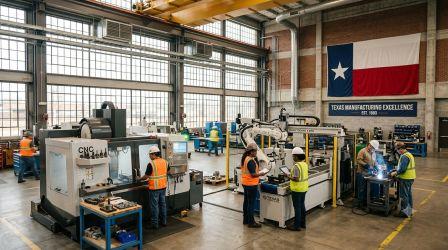
There are still bright spots showing up at the ground level. In Bexar County, officials recently announced plans for a $200 million advanced manufacturing facility expected to create up to 3,000 jobs, supporting equipment used in the state’s growing data center and electric grid infrastructure buildout . The Texas Association of Business has also flagged healthcare costs, workforce training pipelines, and AI adoption as the issues state lawmakers and employers are watching most closely heading into the fall, with a Texas Senate committee holding hearings this month specifically on how AI could reshape workforce resilience .
For Texas business owners, the takeaway is less about any single number and more about the direction: hiring is still happening, particularly in manufacturing, trade, and professional services, but employers should expect a tighter labor supply and slower overall growth than the boom years of the early 2020s. That makes workforce planning — and keeping an eye on the shorter degree pathways state leaders are pushing to fill skills gaps — more relevant than it’s been in years.
Sources:
- Texas Workforce Commission / Governor’s Office — August 2026 labor market data, via EIN Presswire
- Federal Reserve Bank of Dallas — Texas Employment Forecast, September 18, 2026
- Federal Reserve Bank of Dallas — Texas Economic Update
- Lufkin/Angelina County Chamber of Commerce, citing Texas Association of Business Member Newsletter, September 2026